
The New Baseline: Sustainability Reporting in Transition
The New Baseline: Sustainability Reporting in Transition
Insights from 50 Selected Fortune 500® Companies
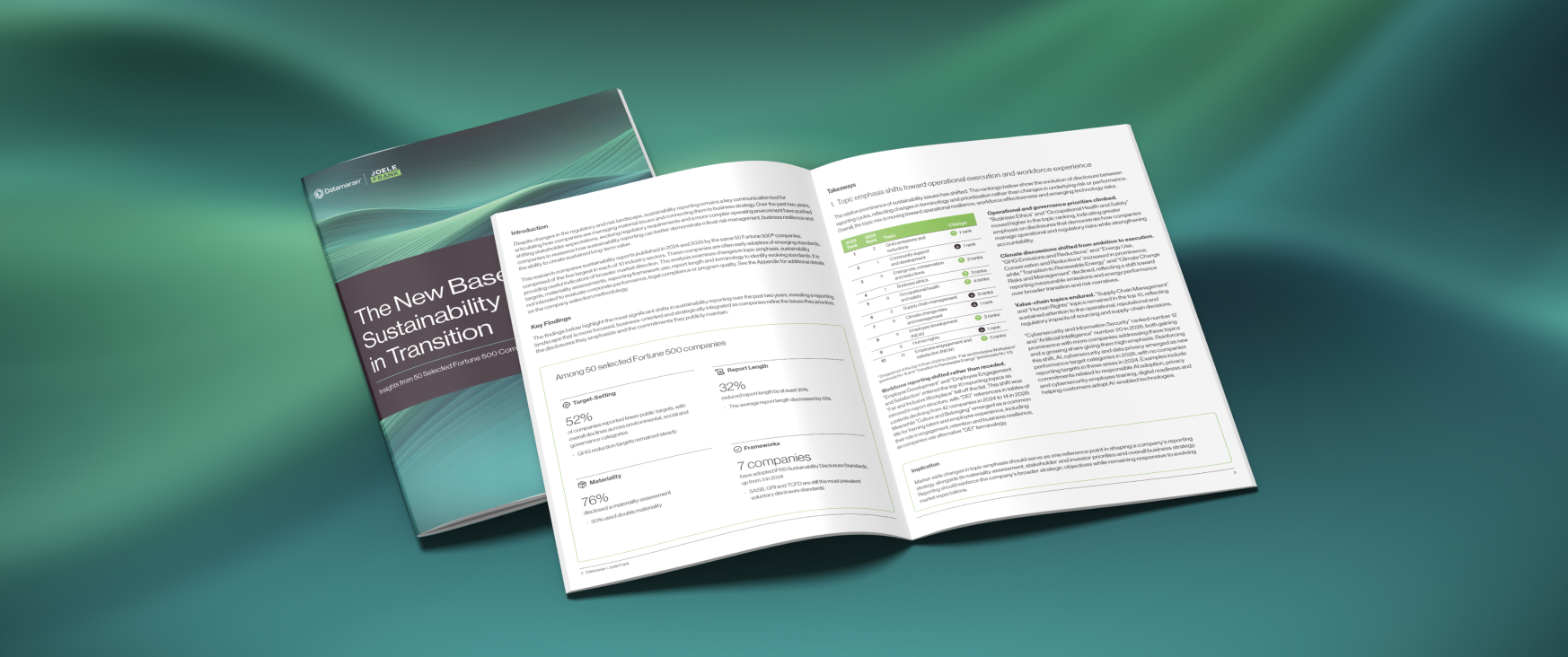
Request a copy of the report to explore how sustainability reporting is evolving.
Report Highlights
Despite changes in the regulatory and risk landscape, sustainability reporting remains an important tool for communicating how companies manage material non-financial topics, support business strategy, strengthen resilience and create long-term value. As investor expectations, reporting standards and stakeholder priorities continue to evolve, companies are reassessing both what they report and how they communicate it. Understanding these shifts provides valuable insight into emerging market practices and the future direction of corporate reporting.
This report, prepared by Joele Frank and Datamaran, an AI-powered governance software platform, compares sustainability reports published in 2024 and 2026 by the same 50 Fortune 500® companies, comprised of the five largest in each of 10 industry sectors. Because these organizations often adopt emerging reporting practices early, their disclosures can signal broader market developments. The analysis tracks changes in topic emphasis, sustainability goals, materiality assessment processes, use of reporting frameworks, report length and terminology. It does not assess company performance, legal compliance or the quality of individual sustainability programs.
Key Findings
The findings below highlight the most significant shifts in sustainability reporting over the past two years, reflecting a more focused, business-oriented and strategically integrated reporting landscape as companies refine priority topics, enhance disclosures and evolve their public commitments.